
By Shabaz Kazia
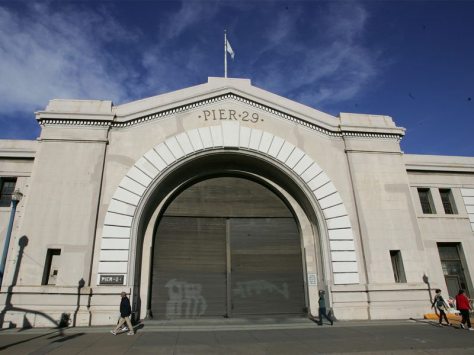
Pier 29 opens to the heart of The Embarcadero in Downtown San Francisco. It’s nestled between neighboring piers, up against the bay’s shore, in-between The Golden Gate and San Francisco-Oakland Bay Bridges. Joggers, bikers, tourists and local pedestrians, often greet Pier 29’s bulkhead doors as a place to call their own.
Also a place they have to defend.
The Board of Supervisors Budget and Finance Committee decided the fate of Pier 29 last Thursday at City Hill. A motion was approved to further real estate investment company Jamestown’s 15-year-lease on Pier 29’s bulkhead. Much to the dismay of some locals.
“This is just the latest chapter in the long struggle over San Francisco’s waterfront which is public land. Beautiful, amazing and unlike most waterfronts, still available to [be] used [by] regular people, not just tall office towers and luxury condos,” said Jon Golinger, North Beach resident and environmental attorney, outside of City Hall. “So this is just the latest chapter in the battle of who the waterfront and city, belongs to.”
The adjacent Piers are littered with ice cream shops, souvenir stores and bustling crowds of tourists. Pier 29 stands at the last totems for San Francisco residents to call their own. The dark gray bulkhead doors that have Pier 29 written above it, is not only a place for locals to enjoy but a symbol that says: This city still belongs to its residents.
Supervisors Malia Cohen Chair of the Committee, Aaron Peskin,–who has jurisdiction over Pier 29–, Norman Yee and Katy Tang, listened to both sides of the argument.
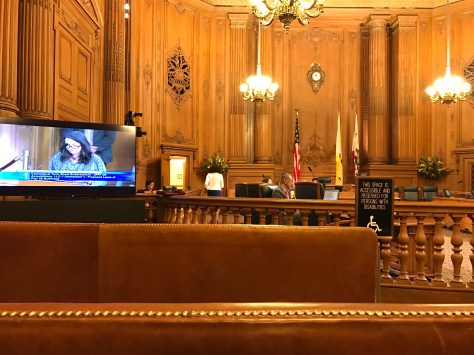
“I think that the Pier 29 project would provide amenities for the tenants in the submarket and give them a place to go and commune and have lunch,” said executive vice president Michael DeMaria, of JLL Commercial Real Estate. “ ….and to have lunch and to purchase things made by San Francisco artisans.”
Jamestown according to their presentation, intends to turn the Pier 29’s bulkhead into a mini-mall that showcases locally made products including a brewery, winery and coffee roasters.
Jamestown already owns leases on Ghiradellis Square and Waterfront plaza which is across the street from Pier 29.
Supervisor Peskin briefly outlined the history of Pier 29 and how in 1990 Prop H — The Waterfront Usage Plan — put a seven-year moratorium on Piers 27, 29 and 31, while a plan was being developed.
According to Supervisor Peskin, the current version of Prop H is undergoing updates that will affect Jamestown’s lease after the initial 15 years. Several developers attempts have been unsuccessful on commodifying Pier 29, due to local concerns on maintaining recreational availability and local inclusion.
“There is language in the laws that says that it needs to be inclusionary and so often and so many of our residents aren’t included in the upcoming development and ideas the city has been seeing,” said Marina Binsack, of progressive group SF Vision.
Supervisor Peskin contingently supported the lease based on three caveats: First, that at least 1/3 are all goods would be from San Francisco based makers such as SF Made.
Second, that only the bulkhead would be used and no areas surrounding.
Third, that any future uses after the lease, would uphold the updated Waterfront Usage Plan and lastly that by February 28th of 2018, The Port Commission would report to the Board of Supervisors potential recreational uses of Pier 29 in line with the Waterfront Usage Plan.
Various community-based groups such as the Sierra Club and Telegraph Hill Dwellers voiced their objections. Claiming the lease was noninclusionary and that the recreational value of the pier was at stake. Also that the 15-year term lease was not in accordance with The Waterfront Usage Plan.
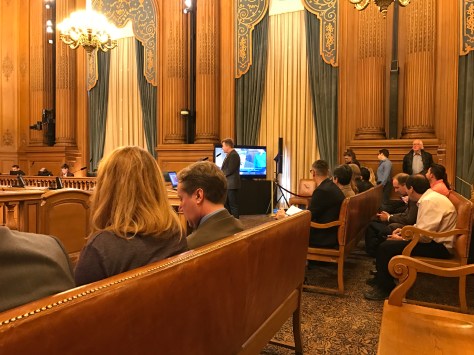
Supervisor Yee echoed the communities’ concerns and expressed his confusions. He was under the impression that at least 50 percent of the bulkhead would be allocated to locally based products.
Project manager for Jamestown, Remy Montico, attempts to alleviate Supervisor Yee’s concerns were unsuccessful. The cautious supervisor pushed for an amendment that at least 50 percent of the bulkhead would go to locals, which was approved by Supervisor Peskin and Cohen.
Even with the new parameters, the community was still apprehensive about the lease.
Hollow promises and the potential for development to spill outside of the bulkhead kept locals on guard. Local concerns were focused on preserving what’s left of the pier that hasn’t been already leased out.
The conceptual term sheet also caused local anxiety about the project, since it states that partial amount of Jamestown’s $5.8 Million investment would be rent credit at $1,182,000 dollars, which at $25,000 a month for rent means at least four years of credited rent.
With the support from Port of San Francisco, Supervisor Peskin, Supervisor Tang, and locals who see the project as a valuable commercial asset, the board approved the amendments and motioned to send the conceptual lease agreement ahead.
“We believe that Jamestown’s efforts to work with SF Made really counters that argument and I think SF Made members and SF Made executive directors, really spoke best about pointing out how manufacturing uses are a dying breed in San Francisco,” said Diane Oshima, Assistant Deputy Director Waterfront Planning for Port of San Francisco. “…..I don’t know that you could find an organization that would be a gateway for more opportunities for you know of all color, all income levels, all abilities. I think it’s a great partnership.”
 Shabaz Kazia